



What Are the Top Replacement Exterior Doors?

Choosing replacement exterior doors is not just a style decision. The right door should suit your climate, entryway, security needs, and budget. It should also close firmly, seal evenly, and feel solid when opened. Small details matter: a visible gap beneath the sweep can invite drafts, while a poorly fitted frame may undermine an otherwise excellent door. There is no perfect door. Materials, installation quality, and maintenance all affect how well it performs over time.

Industry data offers one useful, but limited, benchmark. Remodeling magazine’s 2024 Cost vs. Value report estimated an average U.S. steel entry-door replacement cost of $2,355 and a resale value of $4,430. That equals a reported 188.1% cost recouped. It is a national estimate, not a guaranteed return for every home. Local prices and project details vary. Building scientist Joe Lstiburek is often quoted saying, “Windows are holes in the wall.” His warning concerns the building envelope; the same principle applies to doors, where a weak seal can compromise comfort. This guide compares popular replacement exterior doors by material, energy performance, upkeep, security features, and value. Some trade-offs are easy to miss. A low purchase price may not mean low lifetime cost, and a premium finish cannot fix a poor installation. The best choice depends on the opening and the people using it.
What Are the Top Replacement Exterior Doors?

How to Define a Top Replacement Door by Security, Efficiency, and Durability

A top replacement exterior door should protect the home, limit heat loss, and withstand daily use. Security starts with a rigid door slab, a reinforced frame, and a deadbolt with a deep throw. The lock matters, but so does the strike plate and how firmly it is fastened. Look for clear performance information, such as tested resistance ratings, rather than relying on a heavy feel alone. A solid door can still be poorly installed.

Tips: Check the door’s full perimeter. Continuous weatherstripping should compress evenly, and the threshold should meet the floor without a visible gap. On a cold day, feel near the edges for drafts. Small gaps add up.

Efficiency depends on the door’s insulation, glass design, and fit. Insulated cores and well-sealed glazing can reduce heat transfer, but poor installation may undo those benefits. Ask how the unit is measured and whether its ratings apply to the complete door, not just one component. Durability comes from materials suited to local exposure, protected finishes, and hardware that resists corrosion. Inspect corners, hinges, and the bottom edge for weak points. Maintenance still matters. Even a quality door may need fresh seals or finish care over time; that part is easy to underestimate.
What Are the Top Replacement Exterior Doors?

A qualitative comparison of common door materials for security, energy efficiency, and durability.

Ratings use a 1–5 comparative scale, not a standardized test. Performance varies with door construction, glazing, hardware, weatherstripping, and installation; check product specifications for verified ratings.

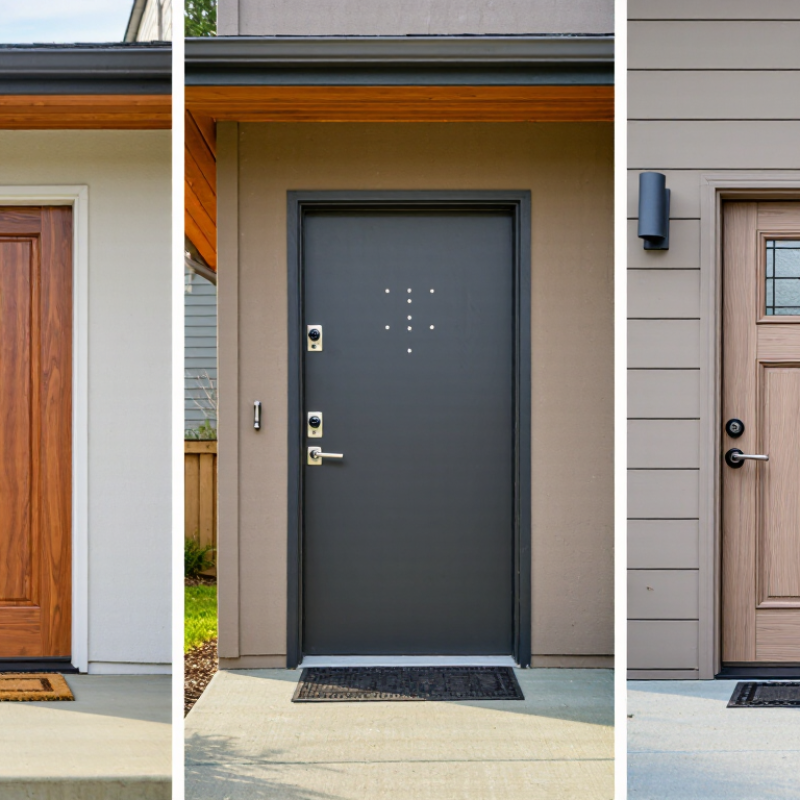
How Steel, Fiberglass, and Wood Compare as Exterior Door Materials

Steel, fiberglass, and wood each suit different homes and climates. Steel doors are usually affordable and strong, but dents can be difficult to repair. Fiberglass resists moisture and needs little upkeep; textured finishes can resemble real wood. Wood offers natural warmth and can be refinished, though rain and sun demand regular attention. The U.S. Department of Energy’s Energy Saver guidance notes that steel and fiberglass doors often insulate better than wood because many have foam cores. Small detail matters.

Performance also depends on the whole assembly. A well-fitted door with intact weatherstripping can help limit drafts, while a poorly installed premium door may still leak. In Zonda’s 2024 Cost vs. Value report, steel entry-door replacement showed an estimated 188.1% cost recouped at resale. That figure reflects a modeled average, not a promised return, and it does not rank every material equally. Choose for your weather, maintenance tolerance, and home style—not resale math alone. I would still check local installer quotes; regional costs vary more than the headline suggests.

Tips: Check the door’s energy label and confirm the frame, threshold, and seals are included in the quote. For exposed, wet locations, fiberglass may be the easier choice. If you love wood, inspect the finish each season.

What Are the Top Replacement Exterior Doors? - How Steel, Fiberglass, and Wood Compare as Exterior Door Materials

Comparison Steel Fiberglass Wood
Typical construction Steel skins, often formed around an insulating foam core; available in different gauges and designs. Molded fiberglass skins, commonly paired with an insulating core and a wood or composite frame. Solid wood or engineered wood construction; species, construction, and finish vary.
Thermal performance Insulated models can perform well. Performance depends on the core, frame, glazing, weatherstripping, and installation. Insulated models can provide strong thermal performance. Check the specific door’s certified energy information. Wood is a natural insulator, but overall performance depends on door construction, thickness, glazing, seals, and installation.
Resistance to dents and impact Can dent or scratch; damage may expose metal and require prompt attention to prevent corrosion. Generally resists dents better than thin steel skins, though a severe impact can crack or damage the surface. Can dent, scratch, or split; many surface marks can be repaired or refinished.
Moisture and weather Steel can rust if its protective coating is damaged or moisture reaches unprotected areas. Fiberglass skins resist rot and corrosion, but the frame, finish, seals, and installation still need to be suitable for the exposure. Can swell, warp, or rot with prolonged moisture exposure or poor maintenance; a suitable finish and weather protection are important.
Maintenance Usually low maintenance; inspect paint and edges and repair chips or scratches that expose metal. Usually low maintenance; clean as directed and monitor the finish, seals, and frame. Typically needs more upkeep; inspect the finish regularly and refinish when weathering or wear appears.
Appearance and customization Available in painted finishes and panel styles; some models have wood-grain textures. Available in a range of panel designs and finishes, including wood-look textures on some models. Offers natural grain and can be stained or painted; species and detailing provide a broad range of looks.
Security considerations Door material alone does not determine security. The slab, frame, hinges, lock, glazing, and installation all matter. Security likewise depends on the complete door assembly, hardware, glazing, frame, and installation. Security depends on construction, frame, hardware, glazing, and installation—not wood alone.
Often a good fit for Buyers seeking a practical, commonly available option and willing to protect the finish from scratches and corrosion. Buyers seeking low routine maintenance and a choice of styles, especially where weather exposure is a concern. Buyers prioritizing natural appearance, customization, and the option to repair or refinish the surface.
Key trade-off Can be economical and insulating when well made, but the surface can dent and damaged coatings can rust. Often balances insulation, weather resistance, and low upkeep, but quality and performance vary by model. Offers distinctive natural character, but generally requires more protection and maintenance against the elements.

Note: Performance varies by product, door configuration, climate, and installation quality. Compare the complete door assembly and its published ratings rather than relying on material alone.

How NFRC U-Factor Ratings and ENERGY STAR Criteria Measure Door Efficiency

An exterior door can look solid and still lose heat around its edges. When comparing replacement options, the NFRC U-factor offers a useful, standardized measure. It estimates how quickly heat moves through the complete door assembly. Lower numbers mean less heat transfer and generally better insulation. That assembly matters. Glass panels, frames, and construction all affect the rating, so compare similar door designs when possible.

ENERGY STAR criteria provide another way to assess efficiency. Qualifying doors must meet program requirements for their product category and, where applicable, climate zone. Those requirements can change, so check the current criteria and the product’s certification rather than relying on an old sales sheet. A label can narrow your choices. It does not tell the whole story.

A low U-factor is valuable, but it cannot fix a poorly fitted door. Gaps at the jamb, a worn threshold, or incomplete sealing can let drafts into a room. Look at installation details alongside the rating. A useful comparison pairs the NFRC label with ENERGY STAR eligibility and a careful inspection of the frame and seals. It is easy to overread one number; even careful shoppers may miss how much the installation affects comfort.

What the 2024 Cost vs. Value Report Says About Steel Door Cost Recoup

JLC’s 2024 Cost vs. Value Report estimates a steel entry-door replacement at $2,355 nationally. It assigns the project an estimated resale value of $4,430, or 188.1% cost recouped. That is striking. The modeled upgrade replaces an existing entry door with a prehung steel unit and updated hardware. These figures are national estimates, not a promise for any home. Local labor rates, door size, glass, finish, and frame condition can change the final cost.

Tips: Get itemized quotes that separate the door, installation, hardware, and any frame repairs. Check whether the estimate includes disposal and trim work. A small overlooked repair can alter the budget.

A return above 100% can seem almost too good at first glance. The report’s resale value is an industry estimate, not cash paid back immediately to the homeowner. Its result may also differ from what buyers value in a specific neighborhood. Still, steel can be a practical choice for homeowners seeking a durable entry door without an elaborate design. Compare the report’s assumptions with your actual quotes before deciding; the national average is useful, but it is not your address.

How Climate, Weather Seals, and Installation Affect Door Performance

The best replacement exterior door is not automatically the thickest one; local exposure matters more. In cold, windy climates, prioritize a low U-factor, a tight compression gasket, and a sill that sheds water outward. The National Fenestration Rating Council label reports U-factor and solar heat gain coefficient, helping you compare tested products. The U.S. Department of Energy’s Energy Saver guidance estimates that air leaks can account for 25–40% of a home’s heating and cooling energy use. That figure covers the whole house, not doors alone. Still, a loose latch-side seal is worth investigating. Small gaps matter.

Rainy, humid, or coastal locations need different details: a protected threshold, corrosion-resistant fasteners, and seals that tolerate temperature swings. ASHRAE’s climatic design data document how outdoor temperatures and moisture conditions vary by location, so one door specification will not suit every home. Ask the installer to check that the opening is square, support the threshold continuously, and seal the perimeter without blocking drainage paths. A well-rated door can still underperform if poor shimming leaves daylight at the jamb. That is not just a finish issue. After installation, close the door on a strip of paper; similar resistance around the frame suggests even gasket contact. It is a quick check, not a laboratory test, and foam alone does not guarantee a good seal.