


What Are the Top Types of Aluminum Patio Doors?

Choosing aluminum patio doors starts with how a room meets the outdoors. A narrow balcony may suit a sliding door, while a wide opening can accommodate folding or multi-slide panels. Hinged French-style doors offer a different feel, with a clear swing area and a familiar threshold. Each type trades space, views, ventilation, and hardware complexity differently.

Energy performance deserves attention, too. The U.S. Department of Energy’s Energy Saver guidance estimates that heat gain and loss through windows account for about 25%–30% of residential heating and cooling energy use. That figure covers windows broadly; it is not a patio-door-specific estimate. Still, it shows why glass area and frame performance matter. The National Fenestration Rating Council’s ratings help compare products using measures such as U-factor and solar heat gain coefficient. Check those values alongside local climate, orientation, and installation details.

Small details count. A low track can ease daily access, but water management still matters. Slim frames may expand the view, though they do not guarantee better insulation. There is no universal winner. This guide compares the main types of aluminum patio doors, their practical strengths, and the trade-offs worth checking before choosing. Real homes can be messy, and product ratings cannot predict every draft, glare patch, or sticky track.
What Are the Top Types of Aluminum Patio Doors?

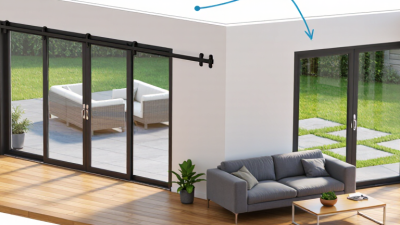
Sliding Aluminum Patio Doors and Their Track Systems

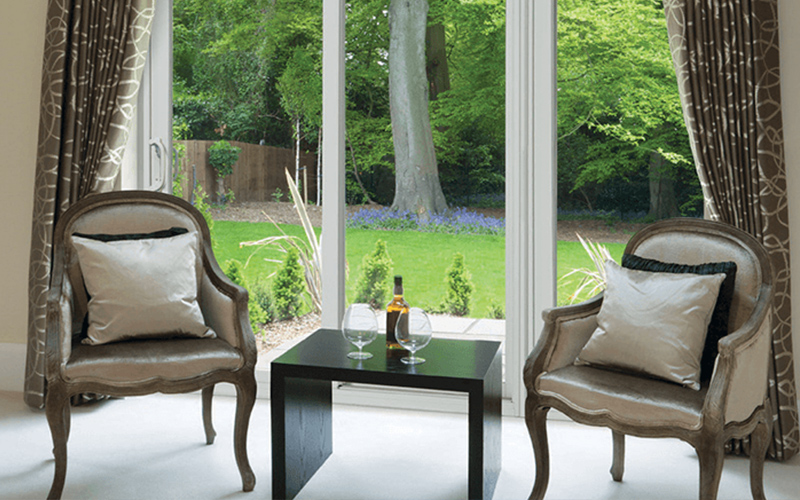
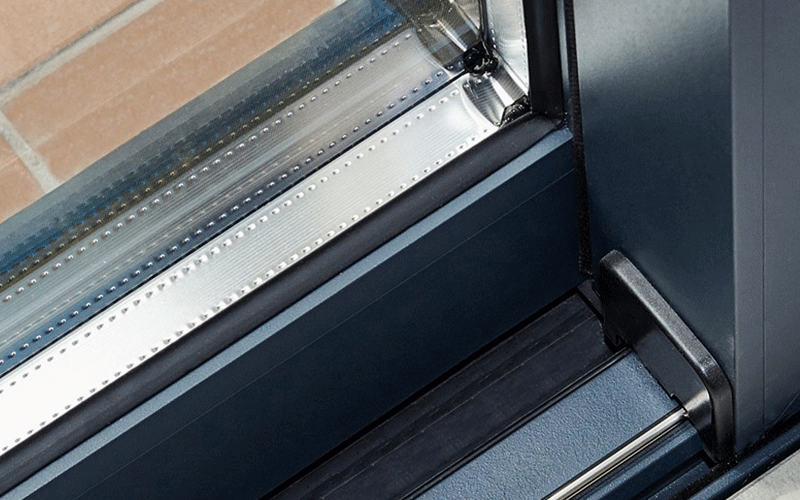
Sliding aluminum patio doors rely on a simple system: panels ride on rollers inside a sill track. A smooth glide depends on square installation, clean channels, and rollers adjusted to carry the panel evenly. Fine grit can feel minor, yet it may increase friction and wear.

Track design also affects water control. Many sills use sloped channels and drainage openings to move rain outdoors; blocked weep holes can leave water standing near the interior edge. Check that openings remain clear, and inspect weather seals where panels meet. A small detail. For a low sill, confirm the drainage design suits the site’s exposure before installation.

Aluminum conducts heat readily, so frame design matters alongside the track. The U.S. Department of Energy’s Energy Saver guidance estimates that heat gain and loss through windows account for about 25–30% of residential heating and cooling energy use; this is not a patio-door-specific figure, but it underscores the value of well-performing glazed openings. The National Fenestration Rating Council (NFRC) label reports whole-product U-factor and solar heat gain coefficient, useful figures when comparing doors.

I would not judge a door by its roller feel alone: operation, air sealing, and drainage each deserve a check.
Hinged and French Aluminum Patio Doors

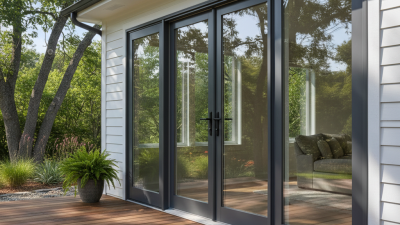
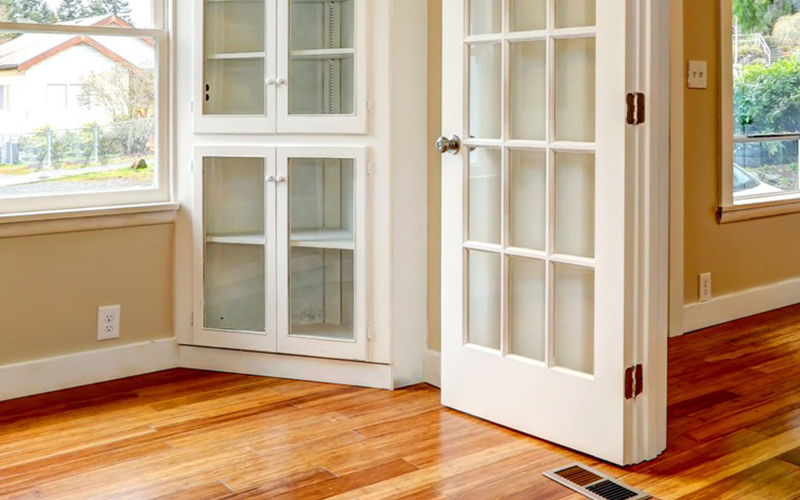
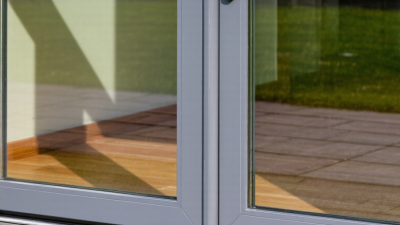
Hinged aluminum patio doors suit openings where a clear, full-width passage matters. A single door swings inward or outward; French-style sets use two hinged leaves, often meeting at the center. Thin aluminum frames can preserve broad glass views, while thermal breaks help limit heat transfer. The practical details matter: confirm swing clearance, threshold height, and where furniture will sit. A beautiful pair can feel awkward if one leaf repeatedly hits a dining chair.

Energy performance deserves equal attention. The U.S. Department of Energy estimates that heat gain and loss through windows account for 25–30% of residential heating and cooling energy use. That figure is not specific to patio doors, but it shows why glass and frame choices matter. Check the National Fenestration Rating Council label for U-factor and solar heat gain coefficient, then compare products suited to your climate. Lower numbers are not automatically better for every home; winter sun can be useful. French doors also need careful alignment and weather seals, since the meeting point can be a weak spot. A small installation error may be hard to notice at first. It still matters.

What Are the Top Types of Aluminum Patio Doors?

Hinged patio doors usually have one operable panel, while French doors commonly use a pair. Sliding doors often have two panels, with one fixed, and folding systems typically use three or more panels. Configurations vary by design; panel count alone does not indicate performance.

Aluminum Bi-Fold Patio Doors for Wide Openings

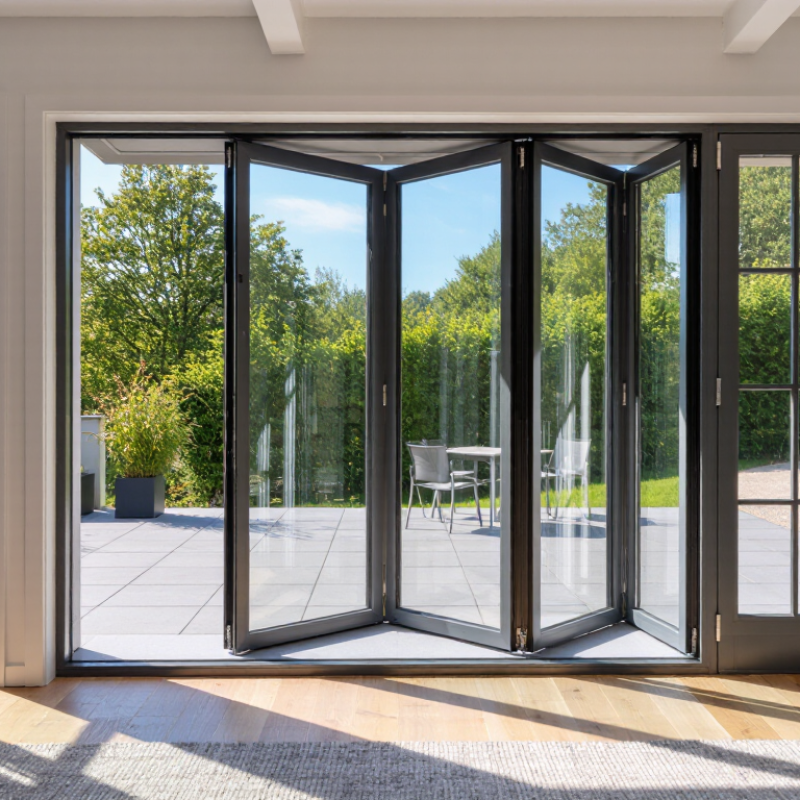
Among common aluminum patio door styles, sliding, hinged, and bi-fold systems suit different layouts. For wide openings, bi-fold doors fold into stacked panels, creating a broad passage between a living room and patio. That can make summer gatherings feel less divided. The effect depends on the opening, not just the glass.

Aluminum frames allow relatively slim sightlines, so more daylight can reach the room. For dependable operation, panels need accurate alignment and a track suited to the opening’s width and weight. A low threshold can ease foot traffic, but drainage and weather sealing still matter. Ask how the system handles wind exposure, water runoff, and thermal breaks before choosing. These details are easy to miss. I would not assume every wide wall suits a bi-fold; furniture clearance and panel stacking space can change the plan.

Tips: Measure the full opening and the space where folded panels will stack. Check the track after installation, and keep it clear of grit and leaves. Small maintenance matters.

Multi-Slide and Lift-and-Slide Aluminum Patio Doors

Multi-slide aluminum patio doors use several moving panels to create a broad opening. Panels may stack at one side or slide into a wall pocket, depending on the design. On a warm day, opening several panels can connect a dining area with the patio. Check how much wall space the stacked panels will occupy. A large opening is useful, but it can leave less room for furniture or curtains.

Lift-and-slide doors work differently. Turning the handle raises the panel slightly on its rollers, releasing pressure from the weather seals. The panel can then move with less effort, even when it is large. Lowering the handle sets it back against the seals. A solid feel matters. Ask to operate a sample, and notice whether it moves smoothly without a hard pull.

The right choice depends on the opening, daily use, and local weather exposure. Look closely at track drainage, threshold height, and thermal breaks in the aluminum frame. These details affect water management, comfort, and accessibility. It is easy to focus only on glass area; I would also check the installation plan and how the track will be kept clear of grit. A small stone can interrupt a smooth slide.

What Are the Top Types of Aluminum Patio Doors? — Multi-Slide and Lift-and-Slide Aluminum Patio Doors

Comparison Multi-Slide Aluminum Patio Doors Lift-and-Slide Aluminum Patio Doors
How They Operate Multiple panels slide along parallel tracks. Depending on the design, panels may stack together at one side or move into a wall pocket. Turning the handle lifts the panel slightly off its compression seals so it can roll along the track. Returning the handle lowers the panel onto the seals.
Typical Opening Often selected for broad openings where several moving panels can create a wide connection between indoor and outdoor spaces. Often selected for large, heavy panels that need smooth movement and a firm closed position.
Panel Configuration Can have several sliding panels, with fixed panels or stacking and pocketing arrangements depending on the system. Commonly combines one or more operating panels with fixed panels; available configurations depend on the system design.
Threshold and Tracks Requires tracks for the sliding panels. A low-profile threshold may be available, but drainage and water-management details vary by design. Uses a track and rolling hardware. Threshold options vary, and the selected sill must suit the project’s accessibility and water-management needs.
Sealing When Closed Weather performance depends on the system’s seals, interlocks, sill design, installation, and exposure conditions. The lift-and-lower action brings the panel against compression seals. Overall weather performance still depends on the complete door system and installation.
Ease of Operation Panels run on rollers, but the operating effort depends on panel size, roller quality, track condition, and maintenance. Designed to reduce seal friction while opening and closing. Correct adjustment and clean tracks help maintain smooth operation.
Aluminum Frame Considerations Aluminum frames can support slim sightlines and large glazed areas. Thermal breaks and suitable glazing can help improve thermal performance. Aluminum frames can accommodate substantial panels. Thermal breaks and glazing selection affect insulation and condensation performance.
Best Fit Suitable when a wide, flexible opening and the option to stack or pocket multiple panels are priorities. Suitable when smooth handling of large panels and compression sealing in the closed position are priorities.
Planning Checks Confirm stacking or pocket space, clear opening width, track layout, drainage, and the support required for the chosen panels. Confirm panel dimensions and weight, handle operation, track and sill details, drainage, and the required clear opening.

Performance, available configurations, accessibility, and weather ratings vary by door system, glazing, installation, and site conditions. Review the product’s tested specifications for project requirements.

How to Compare Aluminum Patio Door Configurations

How to Compare Aluminum Patio Door Configurations

Aluminum patio doors are commonly sliding, hinged, multi-slide, or folding. Compare how each opens before focusing on appearance. A sliding panel saves floor space, but its track needs regular cleaning and can collect grit. Hinged doors offer a wide opening, though they need clear swing space. Multi-slide and folding systems can open larger areas, but their panels, hardware, and thresholds deserve close inspection.

Thermal performance matters, too. The U.S. Department of Energy’s Energy Saver guidance estimates that heat gain and loss through windows account for 25–30% of residential heating and cooling energy use.

That figure is not specific to patio doors, but it shows why glazing and frame performance deserve attention. Compare National Fenestration Rating Council label values, especially U-factor and solar heat gain coefficient, rather than judging by frame material alone. Lower U-factor generally means less heat transfer; suitable solar gain depends on climate and orientation.

Check the sill height, locking points, weather seals, and drainage details. Small differences show up on rainy days. Ask how much clear opening remains when panels are stacked, and whether screens reduce it. A broad glass panel may look impressive, yet feel awkward if furniture blocks its path. I would also verify the stated dimensions against the actual rough opening; measurements are easy to assume, and easy to get wrong.