Top Replacement Windows and Doors Manufacturers in China?

Choosing among China’s top replacement windows and doors manufacturers requires more than comparing glossy catalogs. Product quality often depends on profile thickness, welding precision, glass configuration, hardware durability, and final inspection. A reliable supplier should explain these details clearly, not hide them behind broad claims.

This guide examines manufacturers through practical evidence. It considers factory experience, export records, testing procedures, customization capacity, and after-sales support. Thermal insulation, acoustic performance, air tightness, and water resistance also deserve close attention. For example, a project near a coastal city may need corrosion-resistant hardware and carefully sealed glazing. A residential development in a cold region may require low-E glass, warm-edge spacers, and reinforced frames.

Factory communication matters.

Samples can reveal uneven corners, weak handles, poor drainage design, or inconsistent color. Independent test reports and relevant certifications add confidence, but documents should match the exact product being purchased. Lead times, packaging methods, replacement parts, and warranty terms should be confirmed before a deposit is paid. These details can prevent expensive delays during installation.

No ranking is perfect. Manufacturer capabilities may change, and a strong factory for aluminum systems may not excel at uPVC products. Buyers should also verify current references and inspect production standards when possible. The phrase replacement windows doors covers many designs, climates, and performance expectations. Careful comparison helps connect the right Chinese manufacturer with the right building, budget, and installation plan.

Top Replacement Windows and Doors Manufacturers in China?

China’s Replacement Windows and Doors Manufacturing Industry

China’s replacement windows and doors manufacturing industry is shifting from new construction toward renovation, energy saving, and safer urban housing. The National Bureau of Statistics reported that China’s urbanization rate reached 67.00% in 2024. This large urban housing base creates steady demand for replacement products, especially in older apartment communities.

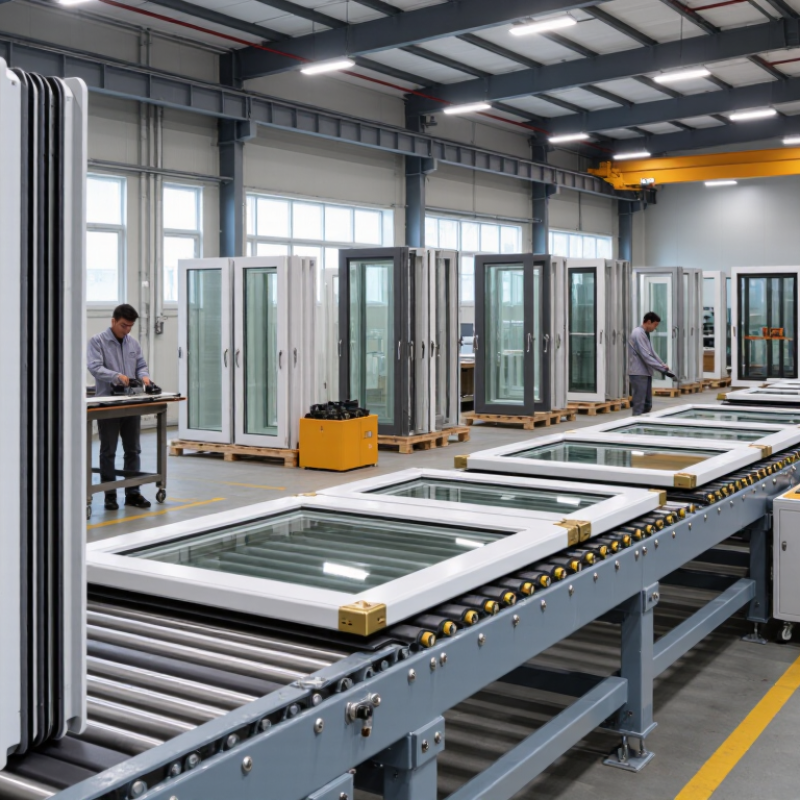
The data are not perfectly comparable. China Association of Building Energy Efficiency reports that buildings account for roughly 22% of national energy consumption. This strengthens the case for low-emissivity glass, insulated frames, airtight seals, and tested thermal performance. Leading manufacturers usually combine automated cutting, welding, coating, and quality inspection systems. They should also provide documented U-values, air-tightness results, material traceability, and installation guidance. Experience matters here. A well-made window can still fail when measurements are careless.

Chinese factories increasingly support customized sizes, different climate zones, and project-based procurement. Coastal regions may require stronger corrosion resistance, while northern projects need better insulation. Replacement work also demands quieter hardware and clean removal practices. However, factory capacity does not always equal field reliability. Buyers should review independent test reports, production records, warranty terms, and completed renovation references. The biggest weakness is often inconsistent installation, not the window itself. Data from market reports can indicate growth, but they cannot fully measure after-sales response or long-term sealing performance.

Top Replacement Windows and Doors Manufacturers in China? - China’s Replacement Windows and Doors Manufacturing Industry

The chart compares commonly used frame materials in China’s replacement windows and doors industry by typical service-life range. Actual durability depends on climate, installation quality, coating, hardware, maintenance, and product specification.

Key Criteria for Evaluating Chinese Manufacturers

Choosing a Chinese window and door manufacturer requires more than comparing catalog prices. In factory audits, I check profile thickness, glass certificates, hardware sources, and coating records. Material claims must match delivered products. That sounds basic. It is not.

The UNEP Global Status Report for Buildings and Construction 2023 found that buildings consumed about 30% of global final energy in 2022. The report also linked buildings to 26% of energy-related emissions. Therefore, manufacturers should provide tested U-values, solar heat gain data, air leakage results, and water penetration results. The U.S. Department of Energy estimates that windows can cause 25–30% of residential heating and cooling energy use. Small specification errors can become expensive comfort problems.

I also evaluate production consistency, not only one impressive sample. Ask for independent laboratory reports, batch inspection records, warranty procedures, and installation instructions. Confirm whether testing follows relevant EN, ASTM, or ISO procedures. A factory visit should include extrusion, corner welding, glass assembly, and final inspection areas. Workers should explain tolerances clearly. If every answer sounds perfect, I become cautious. No checklist is perfect. Shipment history, response speed, and honest handling of defects often reveal more than polished brochures. Cost matters, but traceable evidence matters longer.

Top Replacement Windows and Doors Manufacturers in China? - Key Criteria for Evaluating Chinese Manufacturers
Evaluation Dimension What to Evaluate Practical Benchmark or Requirement Recommended Evidence Why It Matters
Product Compliance Ability to manufacture products that meet the destination market's building codes and performance requirements. Written compliance matrix covering all applicable local standards before production. Test reports, declarations of performance, technical data sheets, and project-specific specifications. Window and door requirements vary significantly between North America, Europe, Australia, and other markets.
Quality Management Documented procedures for purchasing, production, inspection, nonconformity control, and corrective action. Current ISO 9001 certification issued by an accredited certification body, supported by internal quality records. Certificate scope, audit history, quality manual, inspection plans, and corrective-action reports. A certified system helps establish repeatable processes but should not replace product-level inspection.
Thermal Performance Whole-window or whole-door U-value, solar heat gain, and air leakage performance. Use project-specific targets; lower U-value generally means better insulation, while solar-gain targets depend on climate and building design. Accredited laboratory reports identifying the exact frame, glass, spacer, dimensions, and configuration. Thermal performance affects heating and cooling loads, occupant comfort, and energy-code compliance.
Air, Water, and Wind Resistance Resistance to air infiltration, water penetration, and structural wind pressure. Performance class or rating must match the project's exposure, building height, opening size, and local code. Full-product test reports, pressure ratings, test size, test method, and pass/fail criteria. These properties are critical for weather protection, durability, and preventing installation-related failures.
Glass and Glazing Glass type, thickness, safety treatment, insulating-glass construction, spacer, gas fill, and seal quality. Safety glazing, laminated or tempered glass, and insulating-glass specifications selected according to the application and code. Glass certificates, spacer and sealant data, argon-fill records, and batch traceability. Glazing often determines a large part of a unit's thermal, acoustic, safety, and solar-control performance.
Frame Materials Material grade, wall thickness, reinforcement, corner construction, drainage, and surface finish. Approved material specifications with controlled tolerances and documented incoming-material inspection. Material certificates, extrusion or profile drawings, coating specifications, and sample cross-sections. Consistent frame materials reduce warping, corrosion, leakage, and premature hardware or seal failure.
Hardware and Sealing Quality of locks, rollers, hinges, handles, weather seals, gaskets, and sealants. Hardware and seals should be rated for the unit weight, opening cycle, climate, and corrosion environment. Hardware specifications, cycle-test results, corrosion-test data where relevant, and approved component lists. Hardware and seals directly influence operation, security, weather resistance, and service life.
Manufacturing Capacity Available production lines, actual monthly output, equipment capability, labor organization, and peak-season capacity. Capacity should exceed the confirmed project schedule without relying on unverified subcontracting. Factory layout, production plan, equipment list, capacity calculations, and recent production records. A supplier may have adequate equipment but insufficient practical capacity during high-demand periods.
Customization Capability Ability to produce non-standard sizes, colors, configurations, glazing packages, screens, grilles, and specialty doors. Approved shop drawings and production samples must be completed before mass production. Engineering drawings, sample approvals, bill of materials, and documented change-control procedures. Accurate customization reduces field modification, installation delays, and costly replacement work.
Factory Inspection Inspection controls for dimensions, diagonals, appearance, operation, glazing, hardware, drainage, and packaging. Inspection at incoming-material, in-process, pre-shipment, and final-packaging stages. Inspection checklists, measurement records, defect classifications, photographs, and third-party inspection reports. Multi-stage inspection catches defects before products leave the factory and creates an auditable quality trail.
Traceability Ability to identify production date, line, material batch, glass unit, hardware batch, and responsible inspectors. Every order and major component should be traceable from purchase records through shipment. Lot codes, barcodes, production records, material registers, and packing-list references. Traceability supports targeted corrective action instead of broad and expensive product recalls.
Packaging and Logistics Protection against impact, moisture, abrasion, contamination, and movement during inland and ocean transport. Packaging designed for the actual transport route, container loading method, product weight, and unloading equipment. Packaging drawings, loading plans, container photos, moisture protection details, and damage-claim procedures. Good products can still arrive damaged if packaging, loading, or handling controls are inadequate.
Lead Time Control Reliability of quotation, drawing approval, sampling, production, inspection, and shipment dates. A written schedule with approval milestones, material-order dates, production duration, and contingency time. Project schedule, purchase-order terms, production updates, and historical on-time delivery records. Replacement projects are often schedule-sensitive because installation depends on site readiness.
Communication and Engineering Technical communication, drawing accuracy, response time, language capability, and handling of design changes. A named project manager and engineer should respond within an agreed business-day timeframe. Meeting records, approved drawings, revision logs, technical submittals, and escalation contacts. Clear communication prevents specification errors and makes international projects easier to control.
Warranty and After-Sales Support Coverage for frames, glass, hardware, finishes, installation-related exclusions, and replacement components. Warranty terms should define duration, exclusions, claim evidence, response time, and responsibility for freight or labor. Signed warranty document, spare-parts policy, service procedure, and customer-claim records. A transparent warranty is an important indicator of commercial accountability after delivery.
Total Landed Cost Product price plus tooling, testing, packaging, inland freight, ocean freight, duties, taxes, insurance, installation, and after-sales costs. Compare quotations using the same Incoterms, specifications, quantities, packaging standard, and delivery destination. Itemized quotation, freight assumptions, tariff classification, payment terms, and landed-cost worksheet. The lowest factory price is not necessarily the lowest project cost.
Supplier Verification Legal identity, export capability, ownership information, factory location, and consistency between documents and site visit. Verify business registration, bank-account details, production address, and contract entity before payment. Business-license records, factory audit, video or physical inspection, contract documents, and independent verification. Supplier verification lowers the risk of misrepresentation, payment fraud, and unauthorized subcontracting.
Sustainability and Materials Material sourcing, recycled content where specified, chemical controls, waste management, and environmental documentation. Requirements should be aligned with the project's green-building, chemical, and environmental standards. Material declarations, environmental certificates, coating data, waste records, and relevant declarations. Environmental documentation may be required for public, commercial, and green-building projects.

Leading Types of Replacement Windows and Doors Manufacturers

Top Replacement Windows and Doors Manufacturers in China?

Leading Types of Replacement Windows and Doors Manufacturers

Replacement windows and doors manufacturers in China generally fall into several practical categories. uPVC manufacturers focus on insulation, low maintenance, and affordable residential projects. Aluminum manufacturers offer slim frames, larger glass areas, and stronger profiles for modern buildings. Timber manufacturers serve traditional homes where natural grain matters. Composite manufacturers combine materials to balance appearance, durability, and thermal performance. Door specialists often produce sliding doors, folding systems, entrance doors, and fire-rated designs for specific construction needs.

In my experience, the best manufacturer depends on the project, not the factory size. Coastal buildings may need powder-coated aluminum and corrosion-resistant hardware. Cold regions require strong seals, insulated glass, and accurate frame installation. A reliable manufacturer should provide test reports, profile specifications, hardware details, and clear production drawings. Factory audits can reveal useful facts, such as glazing cleanliness, corner welding, and packaging quality. Small defects sometimes appear after delivery. That is worth admitting.

Tips: Ask for full-size samples, not only catalog images. Confirm glass thickness, frame reinforcement, drainage design, and warranty terms. Check whether the manufacturer supports custom dimensions and replacement parts. Request references from similar climate zones. Compare the complete landed cost, including packaging, shipping, installation guidance, and possible adjustments. A low quotation can hide weaker hardware or limited after-sales support. Inspect every critical detail before approval.

Materials, Technologies, and Product Standards

Top Replacement Windows and Doors Manufacturers in China?

Materials, Technologies, and Product Standards

Choosing replacement windows and doors in China requires more than comparing factory prices. Material performance should match the building’s climate, exposure, and design life. Aluminum offers strength, slim profiles, and reliable dimensional stability. Thermal breaks reduce heat transfer through the frame. uPVC can provide good insulation and practical maintenance. Wood-aluminum systems add warmth indoors, but they need careful moisture protection.

Technology affects daily performance. Modern factories may use CNC cutting, robotic welding, and insulated glass production lines. Low-emissivity glass can improve energy control. Argon filling and warm-edge spacers may reduce condensation. Multi-point locks improve security and compression. Check the details. A small gasket gap can cause drafts, noise, and water leakage. Automation helps, but it does not replace skilled inspection. Poor alignment still occurs.

Product standards make supplier comparisons more reliable. Request test reports for air leakage, water penetration, wind resistance, thermal transmittance, and acoustic performance. Depending on the destination market, relevant references may include EN 14351-1, ASTM E283, ASTM E331, ASTM E330, or applicable Chinese GB/T standards. Confirm that reports match the actual profile, glass, hardware, and size. A certificate alone is not enough. Installation quality can change the final result significantly. Practical checks should include corner joints, drainage paths, sealant adhesion, and opening force. One imperfect detail may reveal a wider quality problem, so factory audits and sample testing deserve attention.

How to Select a Suitable Chinese Manufacturer

Choosing a suitable Chinese replacement windows and doors manufacturer requires more than comparing prices. Check their production experience, material knowledge, and export history. A reliable factory should explain profiles, glass options, hardware, insulation, and drainage clearly.

Request recent project references, test reports, and complete product specifications. Confirm whether certificates match your destination market. Ask how they control dimensions, welding quality, surface finishes, and glass defects. A factory visit can reveal storage conditions, equipment maintenance, and actual quality procedures. Visit if possible. Details matter.

Tips: Start with a small trial order. Use approved drawings with exact measurements, colors, opening directions, and packaging requirements. Keep communication in writing. Ask for inspection photos before shipment, and define the inspection standard in the contract. Check lead times honestly, including holiday production delays. Do not select a supplier only because its quotation is low; weak packaging or inaccurate sizing can create expensive problems later.

A professional manufacturer should offer traceability for materials and respond to technical questions without vague promises. Evaluate their after-sales process, spare-part availability, and willingness to correct mistakes. I have found that fast replies do not always mean strong engineering. This is worth questioning. Request a sample corner, hardware set, and full-size unit when practical. Compare operation, sealing, finish consistency, and installation details before approving mass production.