




China Top Replacement French Doors Manufacturers

Choosing among China’s top replacement French doors manufacturers requires more than comparing catalog prices. These doors must fit existing openings, preserve indoor comfort, and operate smoothly for years. A beautiful frame means little when the sill leaks after the first heavy rain.

Fenestration consultant Gary Katz often emphasizes, “Installation is the most important part of any door system.” His point is practical. Even a well-engineered product can underperform when measurements are rushed or drainage is ignored. For replacement French doors, buyers should review frame materials, glass specifications, hardware cycles, weather seals, and installation guidance. Factory quality records matter too. Look for documented testing, stable production processes, and clear responses to technical questions.

A dependable manufacturer should explain tolerances, threshold options, hinge adjustment, and replacement-part availability. Ask for corner samples, finish swatches, and packing photographs. A small detail, like reinforced carton protection, can prevent costly damage during shipping. Energy performance also deserves attention. Low-E glass, insulated panels, and correctly fitted seals may reduce drafts near the living room floor.

Still, supplier claims should not be accepted blindly. Some product pages sound polished but provide few measurable details. That is a warning sign. Request test reports, project references, and installation drawings before placing a large order. The best manufacturers combine customization with disciplined quality control. They also admit limitations instead of promising everything.

This guide examines leading Chinese suppliers through that practical lens. It considers manufacturing experience, design flexibility, export reliability, and after-sales support. The goal is not to crown one universal winner. Every building has different walls, weather, budgets, and expectations. That difference matters.
China Top Replacement French Doors Manufacturers

What Replacement French Doors Are and How They Differ

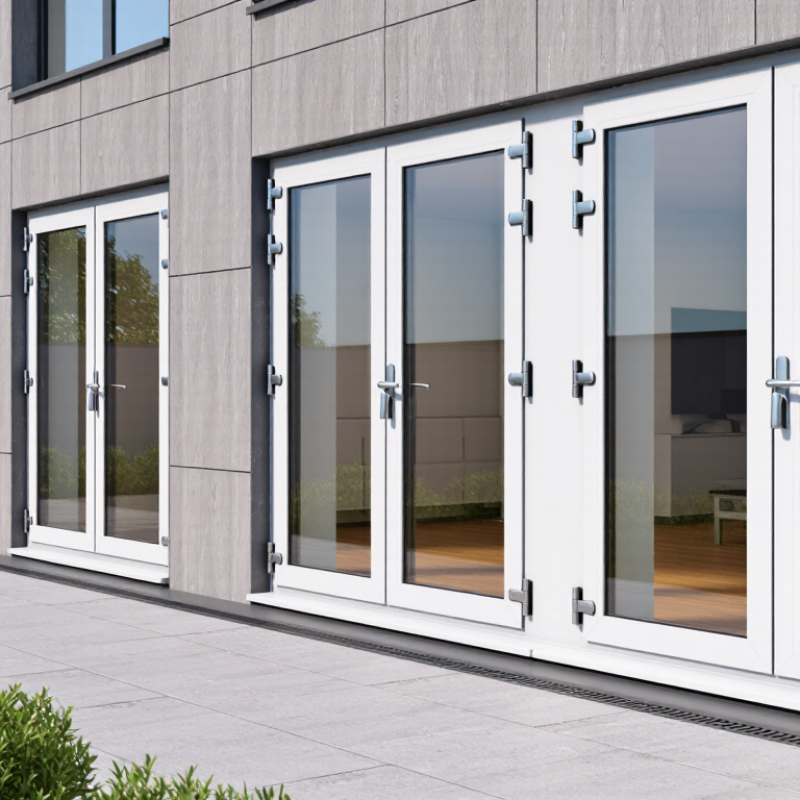
Replacement French doors are a pair of hinged doors, usually with broad glass panels and a meeting point in the center. Both panels may open, though some designs keep one panel fixed. They bring daylight into a room and create a wider passage than many single doors. A small detail matters: check which way each panel swings before ordering. A door that opens into a table or narrow hallway can become inconvenient quickly.

“Replacement” describes the project, not a separate door style. The new unit is fitted into an existing opening, while a new-construction door is generally installed as part of a new wall or major renovation. Compared with sliding patio doors, French doors need clear floor space for their swing. Compared with older hinged doors, modern replacement units may offer updated weather seals, glazing, and frame options, but performance depends on the full assembly and installation. Measurements should include the frame, sill, and opening—not just the visible glass. Close the sample door and feel for drafts. It is a simple check, not a laboratory test. Existing openings can be uneven, too, and that is easy to underestimate. A careful survey helps manufacturers specify a closer fit and reduces surprises during installation.

Common Materials, Styles, and Performance Features

China Top Replacement French Doors Manufacturers

Material selection shapes both appearance and service life. Wood offers warm grain and easy refinishing, but it needs careful moisture protection. Fiberglass resists swelling and usually requires less maintenance. Vinyl provides affordable insulation, while aluminum delivers slim frames and strong wind resistance. However, poor thermal breaks can create cold interior surfaces. DOE Energy Saver reports that windows and doors can represent 25–30% of household heating and cooling energy use, making frame choice more important than many buyers expect.

Common styles include inswing, outswing, hinged, and space-saving sliding French doors. In humid regions, outswing units need reliable sill drainage and corrosion-resistant hardware. For replacement projects, measure the rough opening twice. Small errors can cause air leakage. NFRC performance labels show U-factor, solar heat gain coefficient, visible transmittance, and air leakage ratings. Lower U-factor generally means better insulation, while SHGC should match the local climate and window orientation. One number cannot define a good door.

ENERGY STAR technical criteria emphasize climate-specific efficiency rather than appearance alone. A well-made insulated glass unit may use double or triple glazing, low-emissivity coatings, argon gas, and warm-edge spacers. Yet glazing upgrades cannot rescue a weak installation. Field experience shows that uneven shimming, compressed weatherstripping, and unsealed thresholds often reduce real performance. Buyers should request tested air, water, structural, and forced-entry results from manufacturers, not only attractive catalog images. Professional certification helps, but site conditions still deserve honest review.

China’s Leading Replacement French Door Manufacturers

China’s leading replacement French door manufacturers combine practical engineering with flexible production. They serve renovation projects, apartment upgrades, and custom residential builds. Many factories can adjust door height, panel layout, glazing, frame depth, and opening direction. This flexibility helps when an existing opening is uneven or unusually sized.

Reliable manufacturers begin with accurate site information. Buyers should provide opening measurements, wall thickness, swing direction, climate conditions, and preferred glass performance. Experienced production teams then review drawings before fabrication. They may recommend insulated glass, reinforced hinges, adjustable thresholds, or multi-point locks. Small details matter. A beautiful door can still fail if the threshold drains poorly.

Quality checks should cover frame squareness, seal compression, hardware operation, surface coating, and glass safety documentation. Factory audits, sample approval, and pre-shipment inspections reduce avoidable surprises. Clear warranty terms also show stronger business reliability. However, customization is not automatically perfect. Color variation, packaging damage, or slight tolerance differences can occur during large orders. Buyers should request a physical sample and confirm acceptable limits in writing. Installation remains critical, too. Even a well-made replacement door may leak or bind when the opening is not prepared correctly. Teams that provide installation guidance, drawings, and responsive after-sales support deserve closer consideration.

How to Assess Manufacturers, Quality, and Certifications

China’s top replacement French door manufacturers should be assessed through evidence, not attractive photographs. A reliable factory should provide production records, material specifications, and recent independent test reports. Request samples from the same batch planned for your project. One flawless showroom door proves very little.

The U.S. Department of Energy reports that window heat gain and loss account for 25–30% of residential heating and cooling energy use. Therefore, compare the door’s U-factor, solar heat gain coefficient, visible transmittance, and air leakage rating. NFRC documentation can verify these performance values. Check frame materials, insulated glass thickness, spacer type, weather seals, and threshold drainage. Small details matter.

Ask whether the manufacturer follows ISO 9001 quality procedures, but do not treat certification as automatic proof of product quality. ISO 9001 concerns management systems, not every finished door. Look for third-party testing against recognized air, water, and structural performance standards. Factory audits should examine glass handling, corner welding, coating thickness, hardware installation, and final inspection records. Ask for corrective-action reports; uncomfortable findings can reveal genuine control. A manufacturer that refuses traceability deserves caution. I would also test several doors, not one. Installation conditions can expose weaknesses that factory samples hide. Manufacturers with clear data, repeatable testing, and responsive technical support are usually safer choices for replacement projects.

China Top Replacement French Doors Manufacturers - How to Assess Manufacturers, Quality, and Certifications

Assessment Dimension What to Verify Relevant Standard or Evidence How to Assess Buyer Consideration
Product configuration Door dimensions, handing, panel arrangement, threshold, glazing, and hardware options Dimensioned drawings, approved specifications, and a configuration-specific bill of materials Confirm that drawings show the exact opening size, active/inactive panels, hardware locations, and installation clearances. Performance reports may apply only to the tested configuration, not every size or option.
Air leakage Air leakage through the complete door assembly under a stated test pressure Test report using a method such as ASTM E283, or the applicable regional test method Check the tested specimen, pressure, result, units, laboratory, and report date. Compare results using the same method and rating basis. ASTM E283 is a test method; the required acceptance limit depends on the project specification and applicable code.
Water penetration Resistance to water entry when the assembly is exposed to spray and pressure Test report using a method such as ASTM E331, with the test pressure and observed results stated Verify that the report covers a comparable door design, frame, glazing, seals, and installation details. A test method does not by itself establish a universal pass level; confirm the project’s required performance.
Structural performance Deflection, damage, and operation under specified positive and negative design pressures Test report using a method such as ASTM E330, together with the specified design pressure Match the tested frame, panel size, reinforcement, anchorage, and glazing to the proposed product. The required pressure depends on building location, exposure, and design requirements.
Thermal performance Whole-product U-factor and, where relevant, solar heat gain coefficient (SHGC) A product-specific NFRC label or certified rating for applicable US projects; otherwise, the required local calculation or test evidence Check whether the rating covers the complete door, including frame and glazing, and whether the size and glass package match the order. Compare ratings on the same basis and against the requirements for the project’s climate and jurisdiction.
Regional product compliance Documentation required for the destination market and intended use For applicable European external doorsets, EN 14351-1 product-performance documentation and relevant Construction Products Regulation documentation Confirm the product type, intended use, declared characteristics, and whether the documents apply to the supplied configuration. Applicable requirements vary by market and product; confirm current rules with the local authority or project professional.
Quality management Documented production controls, inspection procedures, corrective actions, and traceability A valid ISO 9001 certificate from an accredited certification body, where claimed Check the certificate holder, site scope, validity dates, and certification-body accreditation. Ask for inspection and traceability records. ISO 9001 relates to a quality management system; it is not a product-performance certification.
Materials and corrosion resistance Frame and hardware material specifications, finish, protective coatings, and suitability for the installation environment Material declarations, coating specifications, finish samples, and relevant test reports Compare the documented material and finish with the approved sample; request details for coastal or high-humidity exposure where applicable. Do not rely on a generic “corrosion-resistant” claim without identifying the material, finish, and test basis.
Glazing safety and identification Glass type, thickness, safety-glazing locations, and permanent product identification where required Glass specifications and applicable safety-glazing evidence for the destination market Verify the glass build-up, safety-glazing marking or documentation, and consistency with drawings and purchase documents. Safety-glazing rules depend on location and installation conditions; confirm local requirements before ordering.
Supplier and shipment controls Pre-shipment inspection, packaging, labeling, spare parts, warranty terms, and complaint handling Approved inspection checklist, order-specific records, packaging photos, and written warranty and claims procedures Agree acceptance criteria in writing and inspect a production sample or shipment before dispatch when practical. Clarify responsibility for transport damage, replacement parts, labor, and remedy timelines before placing the order.

Note: Standards, certification schemes, and building-code requirements depend on the destination market and project. Verify certificates and test reports with the issuing organization or laboratory, and confirm that their scope matches the exact door configuration being purchased.

Key Considerations for Sourcing and Customization

China Top Replacement French Doors Manufacturers

Key Considerations for Sourcing and Customization

Replacing French doors requires more than comparing catalog prices. Measure the rough opening, wall depth, sill height, and door swing carefully. A few millimeters can create installation problems. Specify width, height, frame material, glazing type, color, hardware, and screen options in one document. Include photographs and a simple drawing. Details prevent expensive misunderstandings.

Request samples before placing a larger order. Check the frame corners, gasket compression, lock movement, glass clarity, and drainage holes. Ask manufacturers for air, water, wind, thermal, and impact test reports relevant to your market. Confirm the production process through factory videos, inspection records, or an independent audit. A low quotation may exclude packaging, molds, upgraded hardware, or replacement parts. Clarify every cost.

Customization also needs realistic limits. Unusual sizes may require new tooling, longer lead times, or higher minimum quantities. Confirm color consistency between samples and mass production. Discuss carton strength, corner protection, labeling, and container loading. Ask how damaged units are reported and replaced. Warranties should state coverage, exclusions, and response times clearly. I have seen attractive samples fail because the sill design did not suit local rain conditions. That mistake is easy to overlook. A written approval sample, signed drawings, and staged inspections offer better control than trust alone.